You Won’t Believe What I Found in Patan
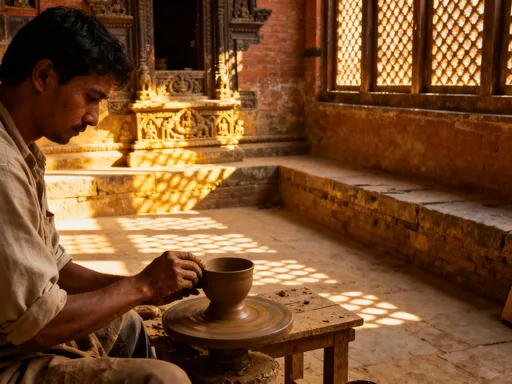
Patan isn’t just another stop on the Nepal map—it’s where ancient art breathes and every alley tells a story. I went looking for temples but left with so much more: handmade incense, silent courtyards, and a potter who shaped clay like it was conversation. This isn’t about ticking landmarks off a list. It’s about slowing down, noticing details, and letting a place surprise you. If you’re chasing real moments, not just views, Patan might just rewrite your idea of travel.
Why Patan Stands Apart from Typical Tourist Trails
Patan, also known as Lalitpur, occupies a unique space in Nepal’s travel landscape. While Kathmandu draws crowds with its bustling streets and Pokhara enchants with mountain vistas, Patan offers something quieter but deeper—an immersive experience of living heritage. Unlike many historic cities where tradition has been preserved behind glass, Patan’s culture is active, evolving, and deeply woven into daily life. Its Durbar Square, a UNESCO World Heritage Site, is not a museum piece but a living center where rituals are performed, festivals celebrated, and artisans work just as their ancestors did centuries ago.
What sets Patan apart is the harmony between preservation and practicality. Residents continue to live in centuries-old homes with intricately carved wooden windows and brick-paved courtyards. Monks walk barefoot through alleys at dawn, collecting alms. Women in traditional saris carry water jars to family shrines. These are not performances for visitors—they are rhythms of life that have endured through earthquakes, modernization, and waves of tourism. The city manages to remain authentic without becoming inaccessible, offering travelers a rare balance: the chance to witness genuine cultural continuity without sacrificing comfort or safety.
Another distinguishing feature is Patan’s focus on craftsmanship. While other cities prioritize commerce or scenic beauty, Patan has long been a hub for metalwork, wood carving, and pottery. This isn’t a recent tourism-driven revival; it’s a centuries-old identity. Families pass down skills from generation to generation, and workshops operate in the same buildings where their ancestors worked. This living artistry gives Patan a texture that can’t be replicated—it feels less like visiting a destination and more like stepping into a sustained tradition.
Arrival & First Impressions: Navigating the City’s Pulse
Reaching Patan from Tribhuvan International Airport or central Kathmandu is straightforward, usually taking 20 to 40 minutes depending on traffic. Many travelers opt for a private taxi for convenience, but taking a local microbus offers a more immersive introduction. These brightly painted minibuses, often packed with commuters, wind through narrow streets lined with prayer flags and small shops selling marigolds, incense, and brassware. The journey itself becomes part of the experience—watching daily life unfold outside the window, hearing snippets of Nepali conversation, and catching the scent of frying sel roti drifting from roadside stalls.
One of the most striking transitions happens the moment you step off the main road. The noise of motorbikes and vendors fades, replaced by the chime of temple bells and the soft shuffle of sandals on stone. This shift in atmosphere is immediate and profound. In just a few steps, you move from the modern pulse of urban Nepal into a world governed by older rhythms. The air changes too—cooler in shaded alleys, fragrant with sandalwood and the faint earthiness of aged brick.
For first-time visitors, arriving in the early morning is ideal. Not only is the light softer and more golden, perfect for photography, but the city feels more intimate. Locals are beginning their day—sweeping thresholds, lighting butter lamps, preparing offerings. By midday, the pace quickens, and tourist groups begin to arrive. Morning also offers cooler temperatures, which is especially welcome during the warmer months. Once in Patan, orienting yourself is simple. The Durbar Square acts as a natural center, with radiating alleys leading to hidden courtyards, temples, and artisan neighborhoods. A basic map or digital guide is helpful, but part of Patan’s charm lies in getting gently lost—turning a corner and discovering a sunlit courtyard or a quiet shrine tucked between homes.
Durbar Square Deep Dive: More Than Just Stone Carvings
Patan’s Durbar Square is often described as one of the most beautiful in Nepal, and for good reason. Its temples rise like intricate lace against the sky, their struts and carvings telling stories from Hindu and Buddhist traditions. But to experience the square only as a collection of monuments is to miss its soul. This is a place of movement, ritual, and quiet reverence. It’s common to see an elderly woman placing marigolds at a shrine, a priest adjusting oil lamps at Krishna Mandir, or a group of schoolchildren sketching the ornate windows of the Royal Palace. These moments are not staged—they are the daily life of the square.
One of the most powerful experiences is arriving at sunrise. As the light spills over the rooftops, the square takes on a hushed, almost sacred quality. The first prayers begin at the Taleju Temple, where devotees circle the base with hands pressed together. There’s no rush, no urgency—just a slow, deliberate start to the day. Visitors are welcome to observe, but the expectation is one of respect. Speaking in low tones, dressing modestly, and removing shoes before entering temple areas are simple gestures that go a long way in showing cultural sensitivity.
The Krishna Mandir, a stone temple dedicated to Lord Krishna, stands as a centerpiece. Built in the 17th century, it features detailed carvings of mythological scenes and a pyramidal roof that rises in perfect symmetry. Unlike many temples that prohibit entry to non-Hindus, visitors can walk around its exterior and admire the craftsmanship up close. Nearby, the Royal Palace, now partly a museum, reveals the opulence of the Malla kings. Its courtyards, especially the Mul Chowk, are lined with guardian deities and ancient stone sculptures. But beyond the architecture, what stays with you is the sense of continuity—how these spaces are still used, honored, and maintained by the community.
Craftsmanship in Motion: Meeting Artists Behind the Scenes
One of Patan’s greatest gifts is the opportunity to witness art in progress. Unlike cities where crafts are sold as souvenirs without context, here you can meet the people who make them, often in workshops that have operated for generations. In alleys near the square, metalworkers hammer repoussé designs into copper and bronze, shaping deities and ritual objects with precision and care. These artisans work in quiet focus, their hands moving with the confidence of decades of practice. Many welcome visitors, not to make a sale, but to share their craft.
Woodcarving is another revered tradition. Skilled carvers restore ancient windows and temple beams, using chisels no different from those their ancestors used. Watching a craftsman shape a lotus motif into wood is like seeing history being rewritten in real time. Some workshops allow visitors to try their hand at simple carving or lamp-making under guidance. These experiences are not commercialized tours but humble invitations to participate. There’s no pressure to buy—just an openness to exchange.
When photographing artisans, it’s essential to ask permission first. Many appreciate the interest but value their concentration. A smile, a nod, and a brief conversation often lead to a warmer interaction than snapping a photo and moving on. Some may invite you to return the next day to see a piece nearing completion. These small connections—built on patience and respect—are often the most memorable parts of a visit. They remind us that travel is not just about seeing, but about engaging with the people who keep traditions alive.
Hidden Courtyards & Silent Temples: Off-the-Beaten-Path Moments
Beyond the main square, Patan unfolds into a network of residential alleys and hidden courtyards known as *patis*. These spaces are rarely marked on maps, and few tour groups visit them. Yet they are among the city’s most serene and authentic corners. Tucked between homes, these courtyards often contain small shrines, stone fountains, and centuries-old trees. Some are maintained by families; others are shared by the neighborhood. They serve as places of prayer, gathering, and quiet reflection.
One morning, I turned down an alley with no name and found a sunlit courtyard empty except for a cat napping on a stone bench. A single oil lamp flickered at a small shrine. The silence was profound—no announcements, no music, just the occasional rustle of leaves. It was a moment of pure stillness, untouched by tourism. Other discoveries include a hidden temple where a monk offered spiced tea without saying a word, or a family courtyard where children played beside a stone statue of Ganesh.
Navigating these spaces requires a gentle approach. It’s best to walk slowly, stay quiet, and avoid entering private homes unless invited. A small map or local guide can help, but sometimes the best way is to wander without a destination. The key is to move with awareness—acknowledging that you are a guest in someone’s world. These courtyards are not attractions to be checked off; they are living spaces that deserve respect. By preserving their tranquility, we help ensure they remain untouched by overcrowding and commercialization.
Taste of Patan: Flavors That Connect You to Place
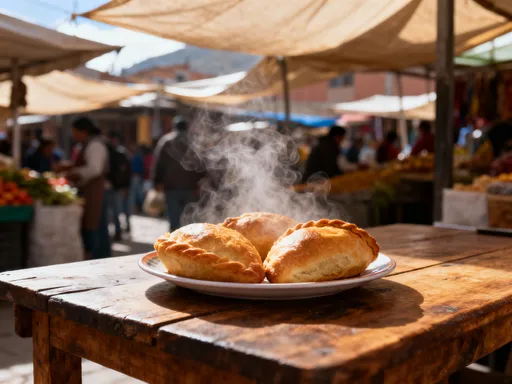
In Patan, food is not an afterthought—it’s a thread that ties people, history, and place together. Meals are often shared in courtyards, family homes, or small eateries that have served the same recipes for generations. One of the most memorable experiences is eating *chatamari*, a rice-flour crepe topped with minced meat, eggs, and spices, at a family-run *bhatti*—a traditional Nepali eatery. These meals are simple but deeply flavorful, made with ingredients sourced locally and cooked over wood fires.
Tea plays a central role too. In the morning, you’ll see locals gathering at small stalls for *chiya*, spiced milk tea served in clay cups. Sitting on a low stool, sipping warm tea while watching the city wake up, becomes a ritual in itself. Some courtyards host tea houses that have operated for over a century, where the walls are lined with old photographs and the owner remembers regulars by name.
For travelers, eating locally can feel intimidating at first—concerns about hygiene or unfamiliar ingredients are valid. But with basic precautions—choosing busy stalls with high turnover, avoiding raw vegetables, and drinking bottled or boiled water—many find the food not only safe but unforgettable. Sharing a meal of *dal bhat* (lentil soup with rice and vegetables) in a family home, invited after a day of exploring, is a highlight for many visitors. It’s not just about the taste; it’s about the connection. These moments of hospitality, offered freely and without expectation, reveal the heart of Patan’s culture.
Leaving With More Than Photos: How Patan Changes Your Travel Mindset
What stays with you after leaving Patan is not the checklist of temples visited or the number of photos taken, but the feeling of having been present. This city doesn’t reward rushing. It rewards attention. The woman shaping clay into a lamp, the artisan smoothing a wooden beam, the monk lighting a single wick—these moments gain meaning only when you slow down enough to notice them. Patan teaches a different way of traveling: not as a collector of experiences, but as a witness to life as it unfolds.
Many travelers leave with a shift in perspective—less interest in ticking off destinations, more desire to understand the rhythm of a place. They begin to ask different questions: not “What’s next?” but “What am I missing here?” This mindfulness doesn’t end when the trip does. It carries forward—into how you walk through your own neighborhood, how you listen to a friend, how you appreciate the quiet details of daily life.
Patan doesn’t offer grand spectacles or adrenaline-filled adventures. Its power lies in subtlety—in the way light falls on a carved window at dusk, in the sound of a bell echoing through an empty courtyard, in the warmth of a shared smile with someone who speaks a different language. These are not moments to be captured, but to be carried. They remind us that the deepest travel experiences are not about distance covered, but about presence achieved.
Traveling through Patan is like learning a new language—one spoken in gestures, silence, and craftsmanship. It doesn’t shout for attention. It whispers. And if you listen closely, it might just change the way you see the world.
So when you plan your next journey, consider this: instead of asking where you can see the most, ask where you can feel the most. Choose destinations not for their fame, but for their depth. Let Patan be a reminder that the best travel isn’t about moving fast, but about moving with intention. In a world that celebrates speed and spectacle, sometimes the most powerful experiences are the quietest ones. Patan doesn’t just welcome travelers—it invites them to pause, to breathe, and to remember why they started exploring in the first place.